AC Running, House Not Cooling: The Ogden Diagnosis Order
Start where the failures actually live. Airflow first: a filter past its life, a blower struggling, or returns blocked by furniture starves the coil, drops cooling, and eventually freezes it. A surprising share of no cooling calls end at this step, which is why any diagnosis that skips it and opens with a compressor is out of order.
In Ogden, an AC that stops cooling is read against the system's whole file: age, refrigerant class, and the furnace it shares a blower with, because the summer repair and the winter verdict are the same document in a two-season market. The guide's order is airflow, refrigerant, then the replacement arithmetic, and a firm that will see the house in January writes the summer answer accordingly.
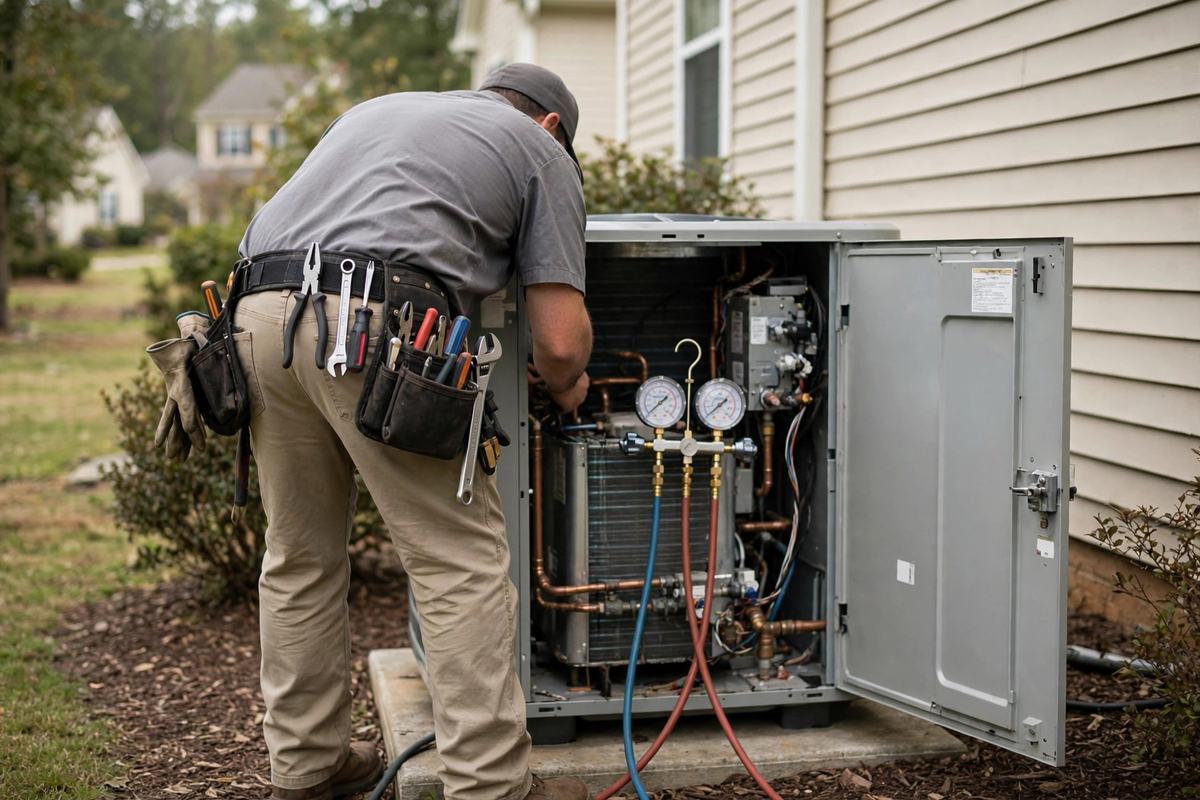
Electrical second: the capacitor and contactor are the small parts that start big motors, and they fail on the hottest days because that is when they work hardest and longest. Gauges third: refrigerant charge is measured, and low charge means a leak to find, because refrigerant circulates in a sealed loop and is never used up.
Ducts last and often: cooled air dumped into an attic through a separated run cools the attic faithfully while the house complains. If one end of the house never cools while the other overcools, suspect the air's road, not the machine making it.
Request a callback
Prefer to talk later? Leave your details and an independent local pro will call you back. No charge to you, no obligation.
Ogden River Heating and Air is a free referral service. Submitting this form connects you with independent local contractors who provide the work.